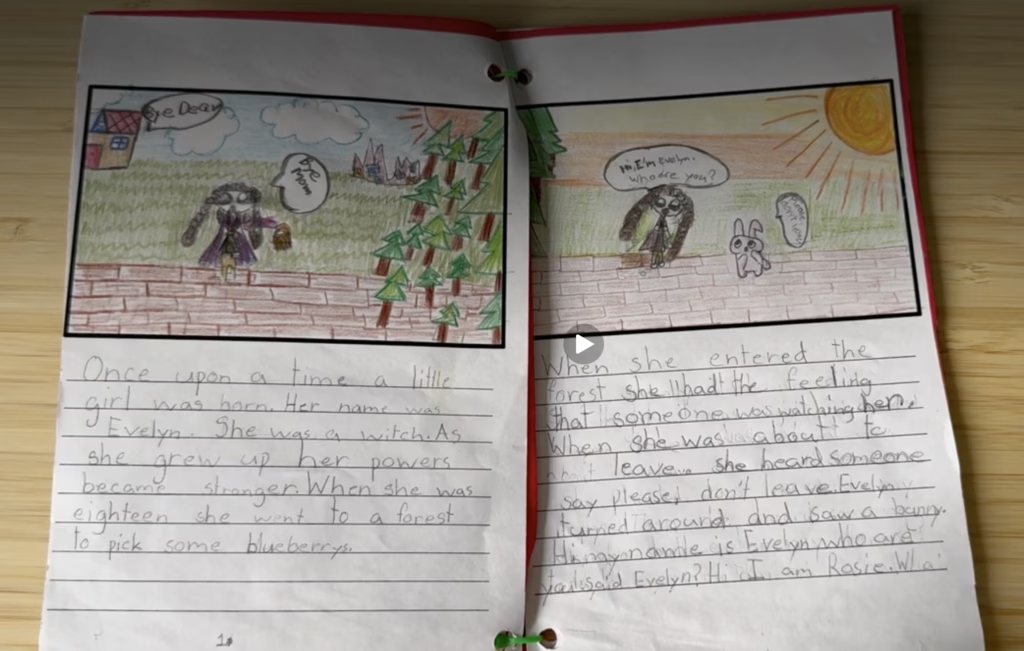
A blank page can feel intimidating. In this guide, I share prompts that help children start with a picture, a feeling, or a small idea and turn it into a story they are proud to share.
What I cover in this video
I walk you through the idea step by step and share practical ways to make it work at home. You can pause the video, try one small part, and return when your child is ready.
Start with a spark
I offer a character, setting, object, or surprising question. A small starting point gives imagination somewhere to go.
Build the middle together
I ask what the character wants, what gets in the way, and what changes by the end. Drawing three boxes can make the structure visible.
Reflect without correcting every line
I invite my child to read the story aloud and talk about one favourite part and one part she might extend. Confidence comes before perfect spelling.
My notes for parents
This is an edited version of the ideas I share in the video. I recommend watching the video once, then choosing the suggestions that fit your child and your routine. There is no need to finish everything in one sitting.
My parent tip: Keep the first session short, notice your child’s effort, and come back to the activity another day.
Use my printable resources to give your child a low-pressure place to write, draw, and revisit ideas.
Story writing can feel difficult when children are asked to fill a blank page without enough conversation first. I begin by helping them talk through a character, a problem and a possible ending, then use writing or drawing to capture the idea.
Help a child move from an idea to a story
- Choose a main character and describe one thing the character wants.
- Decide where the story happens and add two details that can be seen, heard or felt.
- Introduce a small problem and ask what the character could try.
- Finish by showing what changed or what the character learned.
Use self-reflection without making it a test
After the activity, ask which part felt enjoyable, which part needed help and what the child might change next time. Accept drawings, oral answers or short notes depending on age and confidence.
When responding to a story, notice the idea before correcting spelling. Choose one writing skill to discuss so feedback does not hide the child’s creativity.
Parent tip: If your child is stuck, offer two possible choices rather than supplying the whole story. A small decision can restart their thinking while keeping ownership with them.